

Minister Shaheem praises corporate partnerships as Gov’t and Ooredoo launch initiative to renovate mosques
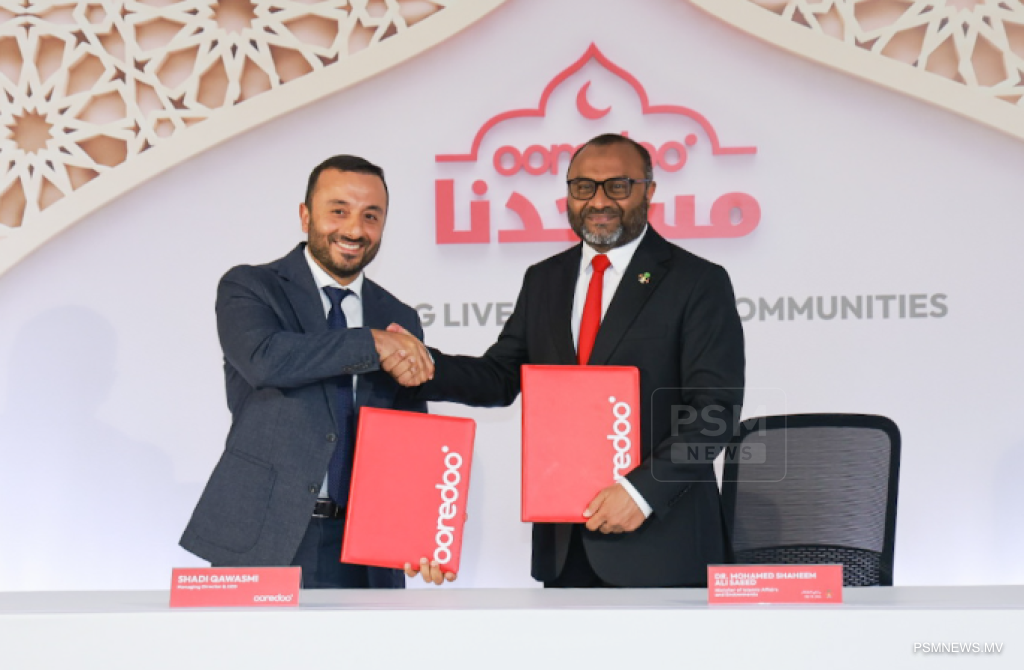
The Minister of Islamic Affairs and Endowments, Dr Mohamed Shaheem Ali Saeed has lauded the growing involvement of corporate entities in religious infrastructure, saying that active private-sector support for mosques instills a deep-rooted respect and esteem for sacred spaces among younger generations.
The Minister’s remarks came during a joint press conference held to officially inaugurate the "Ooredoo Masjidhuna" initiative, a landmark partnership between the Ministry of Islamic Affairs and Endowments and Ooredoo Maldives designed to renovate and improve mosques nationwide ahead of the holy month of Ramadan.
Under the banner of Ooredoo’s Corporate Social Responsibility (CSR) programme, the "Masjidhuna" campaign will see five mosques from various regions across the Maldives renovated annually. All projects are slated for completion before the start of Ramadan each year, aiming to strengthen religious facilities and directly serve the needs of local communities.
Minister Shaheem expressed his delight at Ooredoo's steadfast commitment to national religious endeavours, noting that maintaining and renovating mosques holds a revered status in Islam. He also commended the telecommunications giant for its past contributions, including support for the Mosque Fund, the facilitation of mobile Fitr Zakat payments, and the publication of the Mus'haf Maldives.
"Even removing a bit of trash from a mosque earns immense spiritual reward. This work will proceed in collaboration between Ooredoo and local councils," he said, emphasising the positive cultural and spiritual impact of corporate stewardship.
Ooredoo Maldives CEO Khalid Al-Hamadi affirmed that the company would place special priority on the Masjidhuna initiative, reinforcing the firm's ongoing dedication to community-centric causes and hand-in-hand collaboration with the Maldivian people.
The Ministry hailed the "Ooredoo Masjidhuna" project as a vital, sustainable model for government-private sector cooperation, ensuring the long-term upkeep of the nation’s religious infrastructure for future generations.