

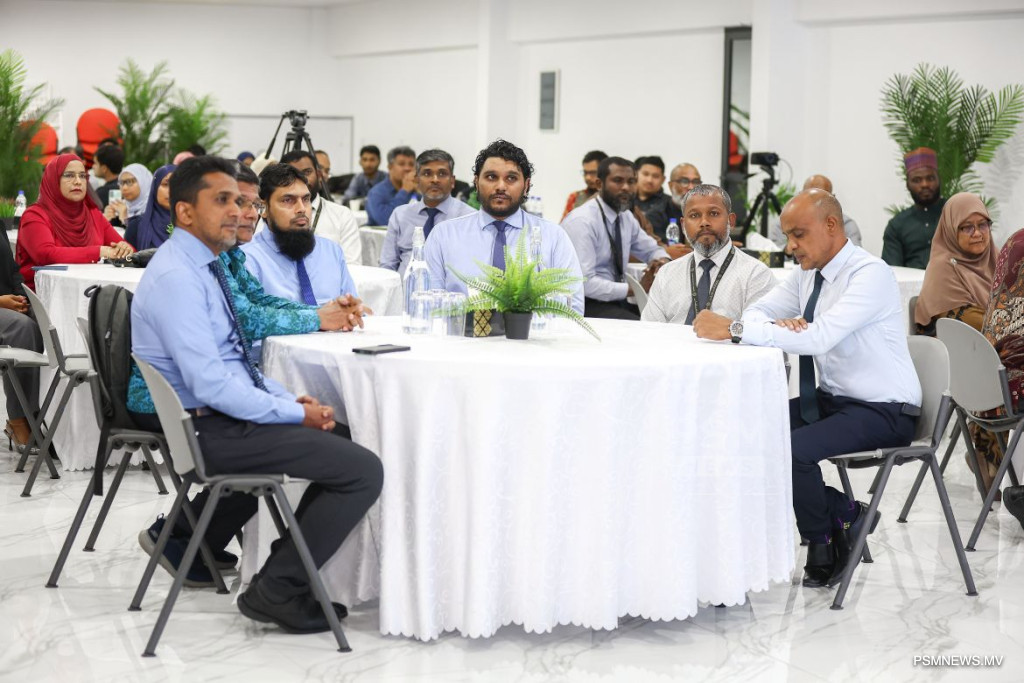
The International Conference on Islamic Economics and Training Camp (IETC) 2026 has officially commenced in the Maldives. The training camp is being organised by the International Islamic University Malaysia (IIUM), in collaboration with the Islamic University of Maldives (IUM).
The opening ceremony was officiated by Deputy Minister of Finance and Public Enterprises Enterprises Ahmed Saaid Mustafa. Speaking at the ceremony, Saaid highlighted the importance of hosting such a training camp in the Maldives.
“The biggest challenge faced by Islamic countries such as the Maldives is managing debt in accordance with Islamic Shariah. I hope this camp will provide an opportunity to discuss ways to address such challenges,” Saaid said.
Speaking at the ceremony, Vice Chancellor of the Islamic University of Maldives, Dr Ali Zahir, said the training camp symbolised the strong ties between IUM and IIUM, adding that the partnership would create further opportunities for students through collaborative initiatives.
Dr Ali Zahir also highlighted the challenges facing economic development, both historically and at present. He said a country’s development cannot be measured solely by economic progress, stressing the importance of strengthening ethical standards within society and establishing Islamic economics as a system operating within an ethical framework.
Speaking at the ceremony, IIUM Vice Director of Research and Innovation, Professor Mohamed Aslam, said this was the fourth camp of its kind. He said the objective of the camp was to develop human resources needed in the field of Islamic economics, and expressed hope that participants would apply the knowledge and skills gained through the camp in practical settings.
Islamic economics is founded on the principles of justice, responsibility, equality and the common good. It is an ethical system that is also aligned with the principles of sustainable development.
The theme of this year’s camp is 'Advancing Islamic Economics for Global Sustainability and Inclusive Development'.
During the camp, participants will explore ways to achieve sustainable and inclusive development, particularly in developing and vulnerable economies, through Islamic economic instruments such as zakat, waqf and Islamic social finance.
In addition, academic discussions and policy-oriented debates will provide young scholars with opportunities to develop practical solutions. The camp also aims to develop a generation of Islamic economics experts capable of formulating policies and systems that promote human development.