

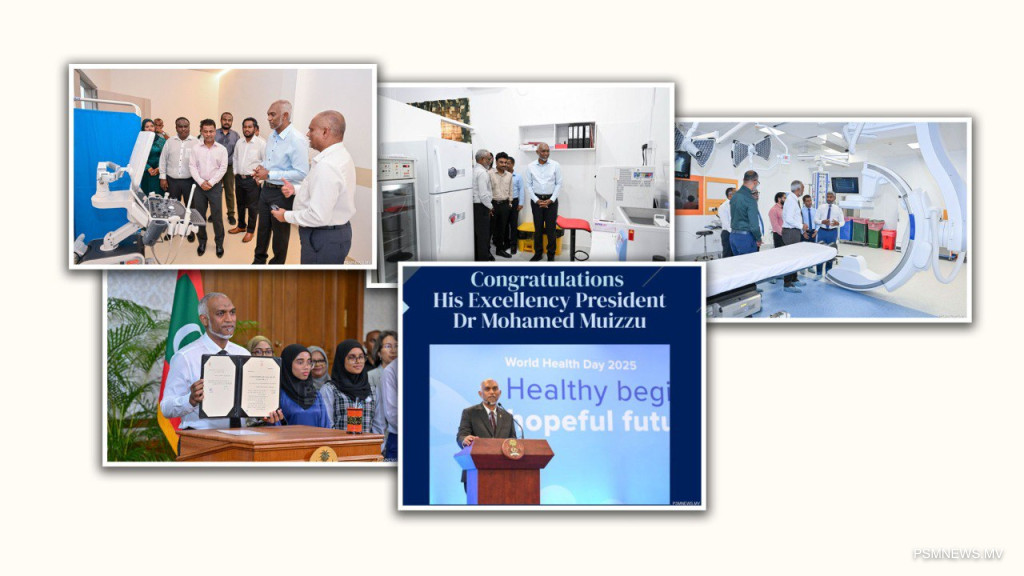
In the Maldives, access to dependable medical care has long been a pressing concern, particularly the assurance that illnesses can be detected and treated before they become life-threatening. Equally urgent is the protection of younger generations from harmful behaviours such as smoking, which predispose populations to severe long-term health risks. While previous governments attempted to address these challenges, President Dr Mohamed Muizzu is now pursuing reforms of a scale that has drawn international attention.
Upgrading hospitals while reinstating preventative medicine
The nation’s dispersed geography has posed persistent logistical difficulties. Although successive administrations maintained a policy of ensuring a health facility on every inhabited island, many of these centres operated out of rented or dilapidated premises, often with severe space constraints that limited even basic diagnostic services. To confront these shortcomings, the government has launched a comprehensive infrastructure programme to upgrade existing facilities and construct new ones. These centres are designed with ward capacity proportionate to island populations and equipped with laboratories to provide essential medical testing locally. Regional hospitals across the atolls are also being expanded to reduce reliance on the capital, Malé, for routine care.
The administration has also turned its attention to preventative medicine, reinstating the Primary Health Care system, a model once utilised but later abandoned. Health experts warn that poor diets and sedentary lifestyles are fuelling a rise in major diseases, making early detection critical. The revitalised system prioritises screening, already assessing more than 24,000 individuals, and emphasises disease management in collaboration with patients and their families. Supporting this effort is the establishment of General Practitioner (GP) clinics in the Greater Malé region. Following global best practices, these clinics serve as the first point of contact, encouraging patients to consult general physicians before seeking specialist care. The first facility opened in the Maafannu district of Malé, with additional clinics planned for Henveiru and Hulhumalé Phase II.
Expanding specialised treatment and patient support
Progress has also been evident in specialised treatment. Honouring a campaign pledge, the government introduced free in vitro fertilisation (IVF) services under the national insurance scheme, Aasandha, in December 2023. The initiative was reinforced by the opening of a National Fertility Centre at Dharumavantha Hospital in late 2024, which has already facilitated successful births. For patients with thalassaemia, a specialised centre has been established in Hulhumalé, alongside the country’s first government-hospital DNA laboratory. The administration has expanded its bone marrow transplant programme, funding procedures for 24 children to date, and increased the monthly patient allowance to USD 129.70.
Optical care has been broadened as well. Government-run optical shops now operate at major hospitals, including Indira Gandhi Memorial Hospital (IGMH) and the Addu Equatorial Hospital. The state subsidy for eyewear has been doubled to USD 129.70, with insurance coverage extended to purchases from private providers. Mental health has been elevated to a national priority with the launch of helpline 1677, a 24-hour service offering psychological first aid and referrals, alongside plans to construct an international mental health hospital.
Government enacts sweeping tobacco restrictions and gains global recognition
The most radical policy concerns tobacco regulation. Whereas previous administrations limited their actions to modest increases in import duties, President Muizzu has enacted sweeping prohibitions. The government has banned vaping and electronic cigarettes outright and imposed unprecedented duty hikes on tobacco products. Most notably, it has introduced a “generational ban,” legally prohibiting the sale and use of tobacco for anyone born on or after 1 January 2007.
These reforms have not gone unnoticed. The World Health Organization (WHO) has cited them as evidence of strong leadership in public health, a sentiment echoed by President Muizzu’s inclusion on Time magazine’s list of the 100 most influential people in health.