

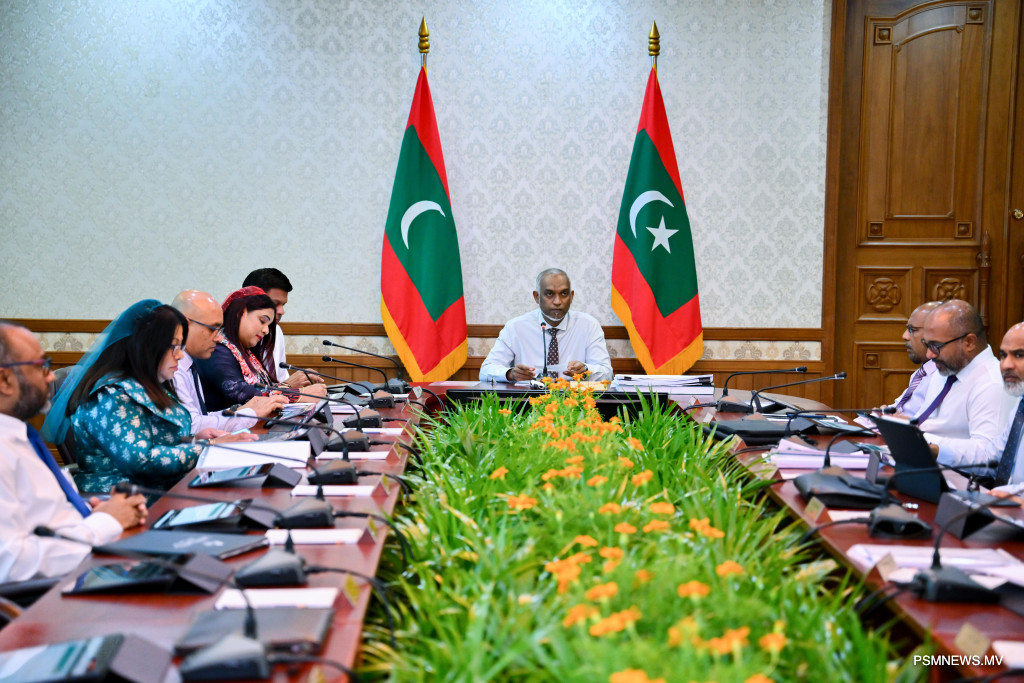
President Dr Mohamed Muizzu has established a special commission to investigate the Maldives' handling of the Chagos maritime boundary dispute before the International Tribunal for the Law of the Sea (ITLOS), following concerns over the substantial losses the country suffered in the case.
The President first announced plans to establish the commission during this year's Presidential Address. The President's Office confirmed that the investigation will focus on ITLOS Case No. 28, which Mauritius brought before the tribunal to determine the maritime boundary and continental shelf limits between the Maldives and the Chagos Archipelago.
The President established the commission under Article 115(o) of the Constitution of the Republic of Maldives, officially naming it the Presidential Special Commission to Investigate the Maldives' Conduct in ITLOS Case No. 28.
The decision follows reports from international experts appointed to examine the maritime boundary dispute and identify a way forward for the Maldives. The President's Office explained that the experts had attributed the loss of a substantial maritime area to the manner in which the Maldives handled the case.
The President's Office highlighted the serious consequences of this loss for the country's fisheries sector and its marine and seabed resources. It emphasised the need to investigate the circumstances surrounding the dispute and take appropriate action.
To carry out the investigation, President Dr Muizzu appointed a seven-member commission chaired by Ahmed Shakir, recipient of the Order of the Dignified Rule of the Dhiyamigili Dynasty. The other members are Abdul Azeez Yoosuf, Dr Aishath Shafiya Adam, Dr Abdul Muhsin Mohamed, retired Deputy Commissioner of Police Mohamed Sadiq, Ahmed Ali Manik and Fathimath Minhath Izzath.
The President has also outlined the commission's responsibilities, directing it to examine the Maldives' handling of the dispute from the period leading up to the submission of the case through the proceedings themselves. The investigation will cover the actions of Government employees, advisers and officials who participated directly or indirectly on behalf of the state, as well as all individuals and parties who exercised authority or held responsibility in connection with the case.
The commission must determine whether any of those involved committed legal negligence and establish its extent where such negligence occurred. It must also examine how the relevant authorities maintained and safeguarded documents connected to the proceedings.
Where the investigation identifies legal negligence, the commission must assess the circumstances and determine the measures it considers appropriate against those responsible. Its mandate further requires it to recommend arrangements that could prevent similar incidents in the future, drawing on the findings of its investigation.
The President's decision specifies that the commission will remain in operation until he determines that it has fulfilled all its assigned responsibilities.