

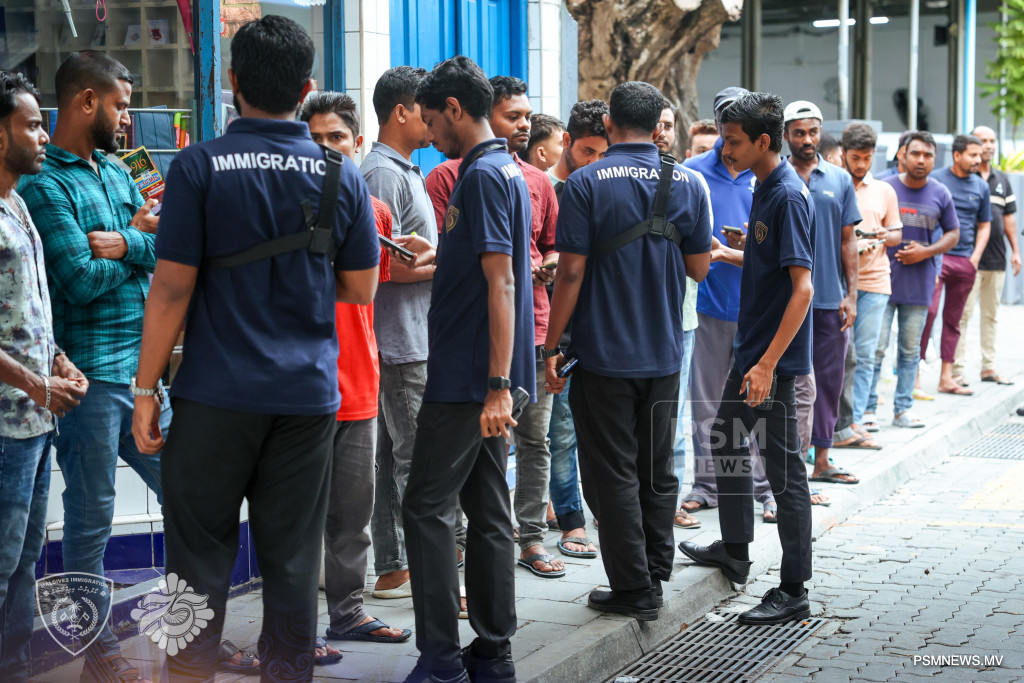
In a major step toward regulating the country’s expatriate workforce, the Ministry of Homeland Security, Labour and Technology has instructed all employers in the Maldives to promptly open bank accounts for their foreign employees.
The directive follows amendments to local employment regulations enacted on 25 August. Under the updated rules, salaries and allowances due to expatriate workers under their employment contracts must be deposited directly into personal bank accounts opened in the employee’s own name. These accounts must be held at financial institutions registered with or authorised by the country’s central bank, the Maldives Monetary Authority (MMA).
The Ministry emphasised that this system will serve as the sole legal proof of wage distribution. In the event of salary-related disputes investigated by the Labour Relations Authority (LRA), an employer will only be considered to have paid their worker if the transaction was recorded as a deposit into the employee's personal, MMA-authorised bank account.
While the Employment Act previously contained provisions requiring bank deposits for foreign workers—backed by fines for non-compliance—the enforcement of these penalties was suspended in the past. The government noted that many undocumented expatriates faced barriers that prevented them from opening bank accounts. Originally, the banking mandate was also utilised as a mechanism to collect the state's remittance tax, a levy on money sent abroad by foreign workers.
The government’s renewed push is part of a comprehensive strategy to regularise the foreign workforce and secure their fundamental labour rights. Currently, the expatriate labour market faces significant currency-related challenges. While some workers are paid in US dollars (USD) and others in Maldivian Rufiyaa (MVR), issues frequently arise regarding workers selling their foreign currency on the black market, or those paid in MVR being forced to purchase USD at highly inflated rates to send money home.