

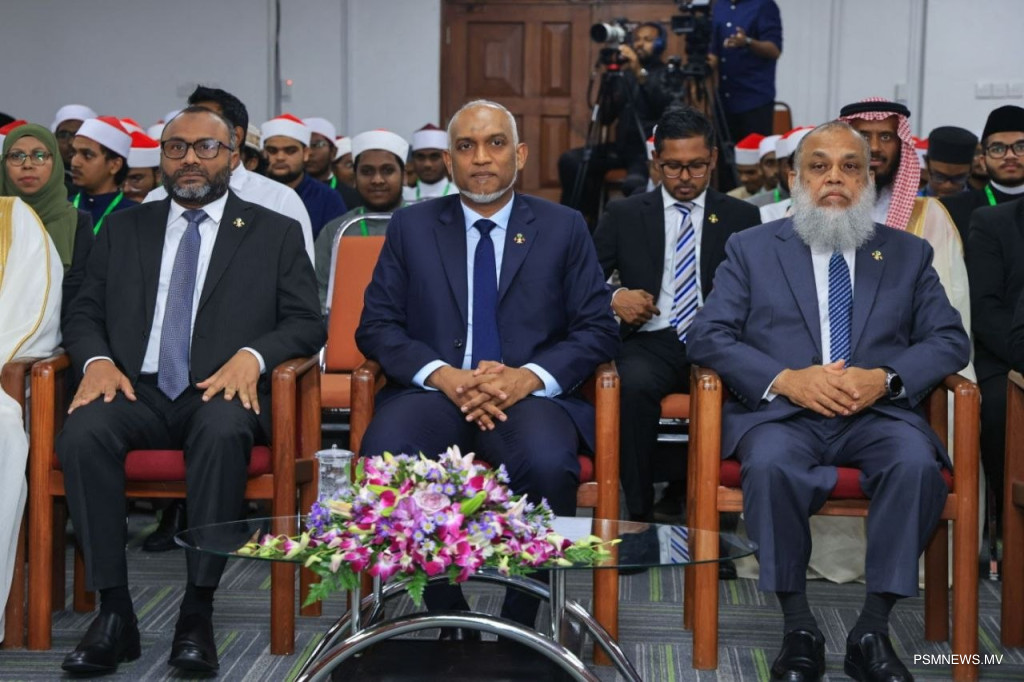
Minister of Islamic Affairs and Endowments Dr Mohamed Shaheem Ali Saeed has said that ongoing endowment projects could eliminate the shortage of funding for the Islamic sector within two years.
A company named Maldives Endowment Investments Limited was recently established under a Presidential Decree as a government company to strengthen and modernise endowment activities.
The minister said despite the company’s establishment, mosque management will not be transferred to the new company, and outlined that the company’s mandate is to undertake business activities to generate income for mosque renovations and repair. Noting that the Maldives has over 800 mosques across the country, he said assistance for mosque repairs is already being given based on the population of different communities.
The minister said endowments should be managed through a modern system while remaining within the framework permitted by Sharia. He noted that the government’s efforts in this sector are a strong step taken by the government, and said endowment buildings will benefit the islands they are constructed on as well as the atoll as a whole.
Six endowment-building projects are currently underway, with the income from these projects intended to support mosque renovations and religious services.
The minister stressed that mosque maintenance cannot rely solely on the government budget and that profitable, Sharia-compliant ways of generating income should be developed. He also emphasised the need to protect Islamic buildings and develop commercial activities such as bookshops around Islamic centres where appropriate, adding that Islamic centres across the world follow a similar model.
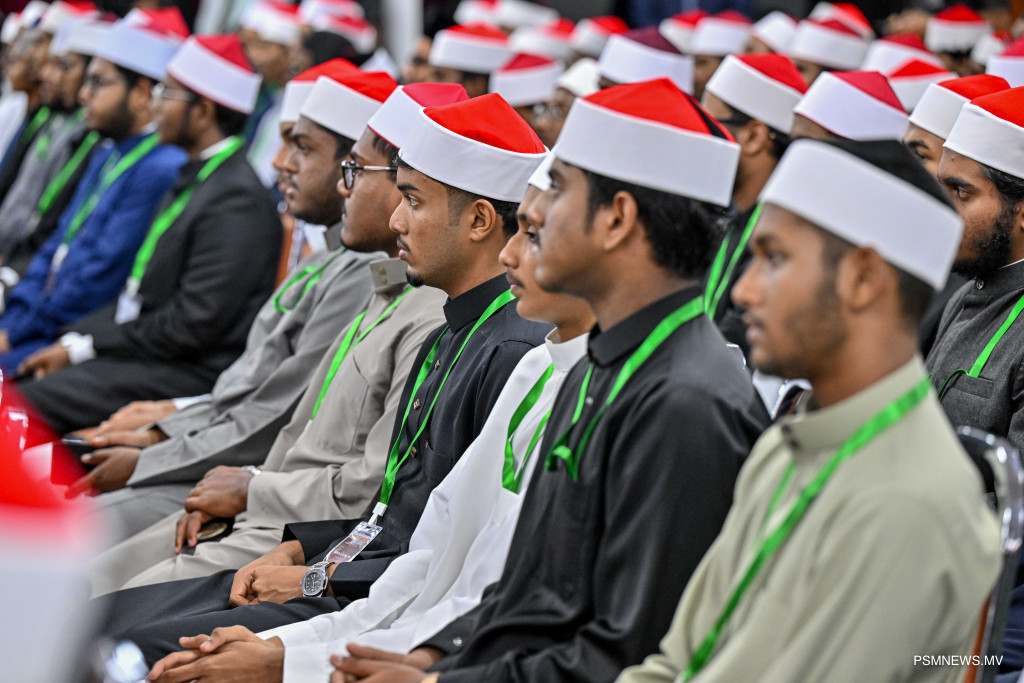
Minister Shaheem then moved on to the topic of young khatheebs, stressing that a new generation of imams and khatheebs is urgently needed. Noting that the majority of the individuals currently filling these roles are of the older generation, he warned that the country could face a major shortage in these roles if the current gap remains unfilled. He said the existing religious workforce is ageing, with many experienced imams, khatheebs and other religious figures now elderly, while some have already passed away.
Noting that previous efforts to train imams and qaris produced an adequate number of personnel needed for islands, the minister said the efforts did not sufficiently produce a new generation returning to serve in communities as most of the trained individuals were elderly. According to the minister, despite the introduction of Maldives Qualifications Authority (MQA)-approved courses for training religious personnel, trained imams and qaris did not return to their islands, which caused shortages in trained professionals in their respective islands.
To address this issue, the government launched a national project in 2024 to develop future imams and khatheebs. So far, 700 young khatheeb and imams have been trained under the programme. Minister Shaheem said the programme combines modern education with Tajweed, Quranic studies and Islamic jurisprudence, at A-level standard. He stressed that becoming an imam or khatheeb does not depend on attending a particular school or holding a specific certificate, and that every Muslim should be encouraged to qualify for these roles.
The government is also providing training opportunities for imams and khatheebs abroad. The minister said 100 opportunities had been provided to current imams over two years, including opportunities in Brunei, Indonesia, Malaysia and Saudi Arabia. Imam salaries have also been increased, he noted.
Of over 800 mosques in the Maldives, 65 mosques currently have no permanent imam. While a further 101 mosques are currently under construction, the minister said the government’s training programmes are intended to help address the shortage of imams and khatheebs with these new additions.