

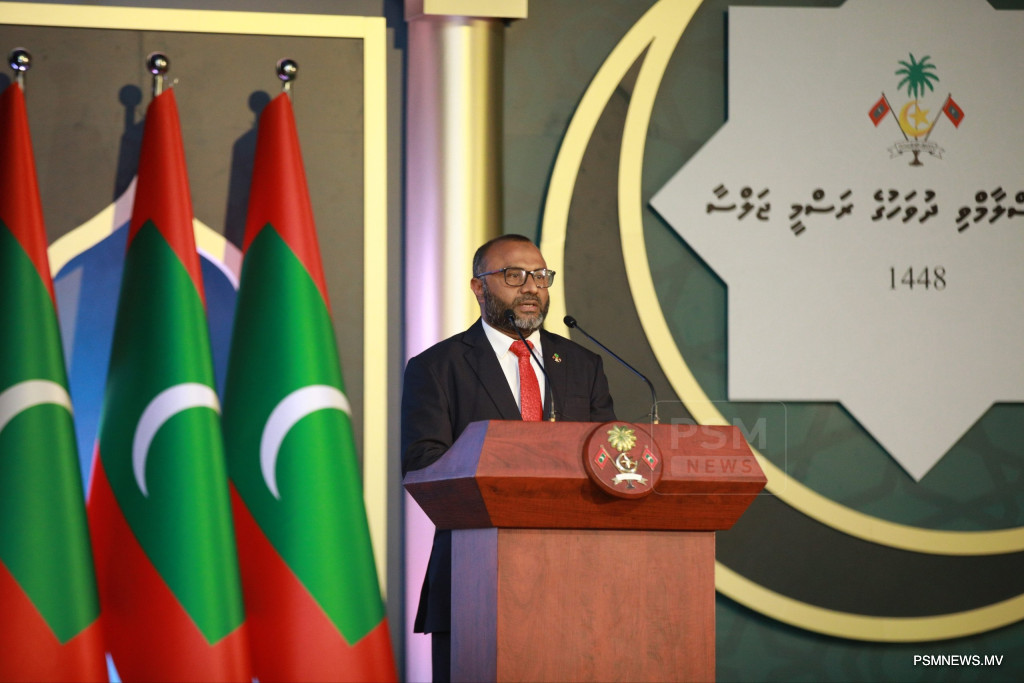
Projects currently being undertaken in the Islamic affairs sector are important efforts to ensure that the Maldives is preserved as an Islamic nation for future generations, Minister of Islamic Affairs and Endowments Dr Mohamed Shaheem Ali Saeed has said.
Speaking at the official ceremony held to mark the Maldives’ conversion to Islam, Minister Shaheem highlighted the reasons why the Maldives has remained an Islamic nation to this day.
The Minister highlighted Allah’s divine will, as well as worldly factors, as among the key reasons the Maldives has remained an Islamic nation to this day.
Regarding worldly factors, the Minister noted that the love and respect for Islam in the hearts of the Maldivian people have played a significant role. He said that throughout every period when the nation faced challenges to its sovereignty and independence, Islam had brought Maldivians together. He also noted that Maldivians had remained steadfast in their strong Islamic faith and continued to bring others into the guidance of Islam.
“Because of the strong jihad of the people, the sound policies pursued by successive governments over 900 years to protect Islam, and the services and efforts of those who ruled the country during different periods, we must remember their contributions. The strong bond between the Maldivian nation and the Islamic Ummah, and the close relationship with Islamic countries, have been very important factors in ensuring that the Maldives has remained an Islamic nation,” Minister Shaheem said.
The Minister identified constitutional and legal protection as another important factor that has safeguarded Islam in the Maldives for 900 years. He said that the Maldives would continue as an Islamic state in the centuries ahead by further strengthening existing laws and establishing a robust system within the Parliament to ensure that legislation is formulated in a manner that does not contradict Islam.
Highlighting major projects being undertaken in the Islamic affairs sector, the Minister said significant work had been carried out over the past two years.
He noted that a Zakat Act had been established and that Zakat-related affairs had been strengthened. He said confidence in the Zakat system had increased, resulting in annual increases in the amount collected and greater benefits from the system. He also noted that Zakat scholarships, which had been suspended for six years, had resumed last year.
“We are currently undertaking some of the largest Waqf projects in our history. Completing these projects within two years is our target. The Waqf system is expanding across the Maldives. We are working to launch the Da'rul Noor project towards the end of this year or early next year. As a result of these projects, hundreds of millions of rufiyaa will be deposited into the Waqf Fund. This will provide the Maldivian state with the funds needed to spread the light of Islamic guidance throughout the country. We will see the results of these efforts in two years,” Minister Shaheem said.
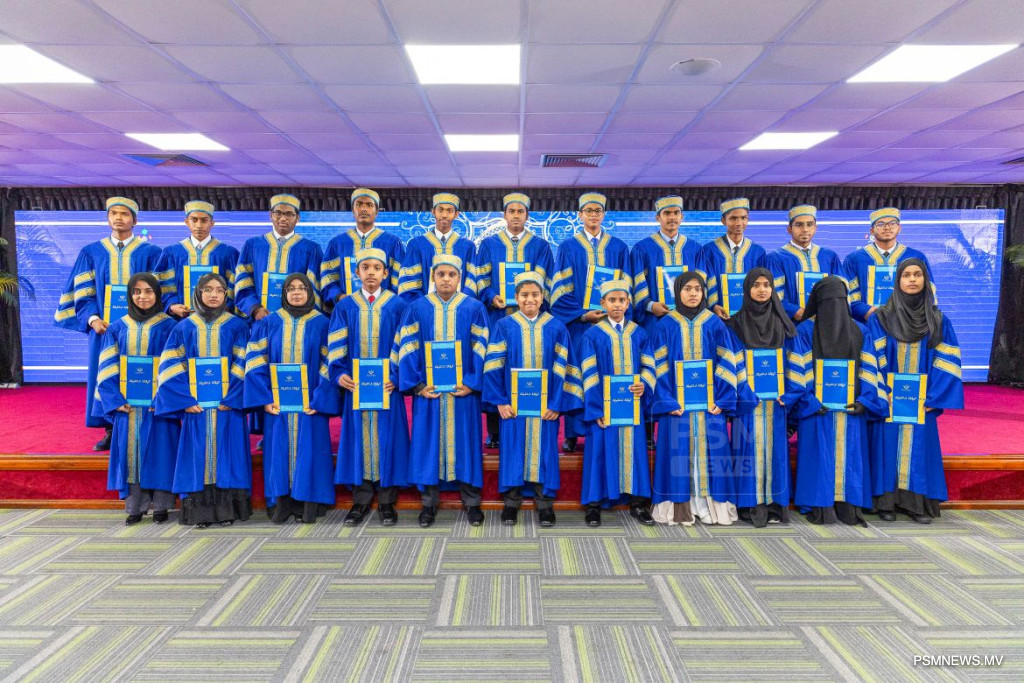
The Minister also highlighted extensive efforts to promote knowledge of the Holy Quran, noting that allowances for Hafiz have been increased.
He said Quran centres had been established in 30 islands to expand Quranic education across different parts of the Maldives, while work was under way to register 20 additional centres. He added that work was currently being carried out at 58 centres, while a decision had been made to include the development of 30 centres in next year’s budget.
The Minister said the purpose of these initiatives was to continue efforts to preserve the Maldives as an Islamic nation and to ensure that the country is passed on to future generations as an Islamic nation.
In his remarks, the Minister said the country is currently experiencing good times from an Islamic perspective and stressed the need to work together to preserve these conditions. He said that despite differences in political views, Maldivians must remain united on matters concerning religion and the sovereignty of the country.