

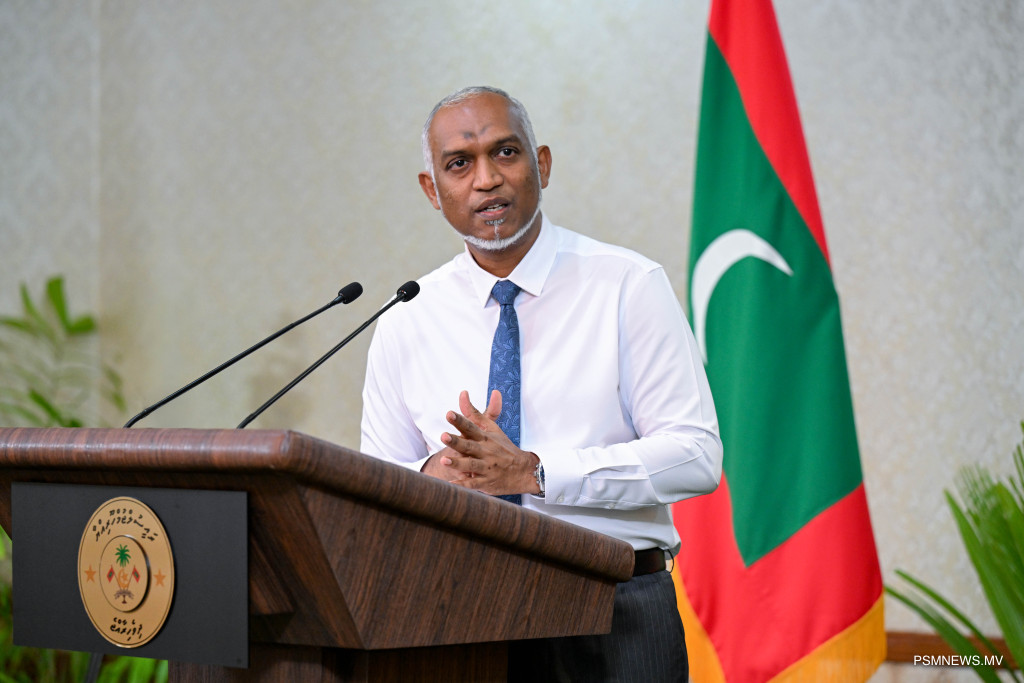
Local councils function fundamentally as an extension of the state’s executive branch rather than as independent oversight bodies, President Dr Mohamed Muizzu said.
Speaking at the campaign headquarters of the ruling People’s National Congress, President Muizzu highlighted that the nation’s legal framework integrates councils into a singular executive structure, where their primary mandate is to facilitate public service delivery through maximum cooperation with the central government.
To ensure administrative efficiency, President Muizzu urged the electorate to favour candidates in the forthcoming local elections who demonstrate a commitment to the administration’s developmental goals. He warned of the systemic friction that arises when municipal bodies operate in political opposition to the state.
"Local councils represent a fundamental tier within the executive branch; therefore, if internal conflict arises within this structure, it inevitably leads to dysfunction," President Muizzu said. He detailed a top-down workflow where the government assigns tasks, such as land registration for specific projects, to the councils.
Highlighting the risk of institutional gridlock, the president questioned the viability of councils led by opponents who might operate under the directives of rival presidential candidates. "Will they not deliberately work to prevent that development from taking place in their jurisdiction?" he asked.
As the administration prepares to launch numerous infrastructure programmes to fulfil electoral pledges, President Muizzu appealed to the public to set aside partisan affiliations. Electing officials who might impede these plans, he cautioned, is tantamount to citizens actively obstructing their own future prosperity.