

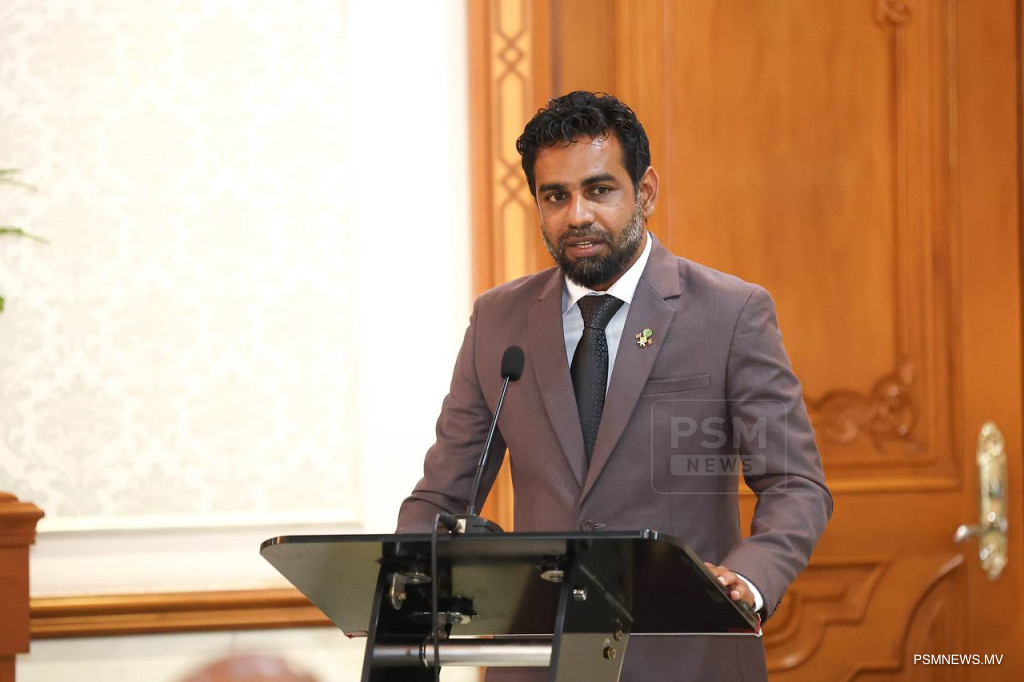
Husnee Mubarik, President of the Judicial Service Commission, announced that a planned new court complex would ease chronic space constraints and accelerate the resolution of legal cases. Mubarik, who also serves as the Member of Parliament for Manadhoo, delivered his remarks at a ceremony marking the appointment of two judges to the High Court and one judge to the Criminal Court.
In his address, Mubarik drew attention to the persistent challenges confronting the judiciary, noting that public debate has long centred on the slow pace of litigation. He observed that delays in court proceedings and the accumulation of backlogs have shaped the prevailing narrative. He stressed the importance of confronting the causes of inefficiency, noting that addressing the root causes of these delays and providing the judiciary with comprehensive resources is essential.
He went on to highlight the structural nature of these obstacles, urging acknowledgement of the resource deficits that hinder the administration of justice. “When we discuss the high volume of pending cases and the growing backlog, these underlying issues must be acknowledged,” he said. “We have heard complaints regarding the judiciary’s space constraints for ages. The shortage of human resources and staff is a recurring theme.”
Despite these challenges, Mubarik expressed confidence that the forthcoming infrastructure project would mitigate many of the judiciary’s persistent difficulties. He confirmed that construction of the new court complex is scheduled to begin later this year.
The ceremony also marked the induction of new judicial leadership. Judges Abdul Rauf Ibrahim and Ismail Shafeeu were appointed to the High Court, while Judge Ahmed Niyaz assumed his role at the Criminal Court. The oath of office was administered by Supreme Court Justice Abdulla Hameed.