

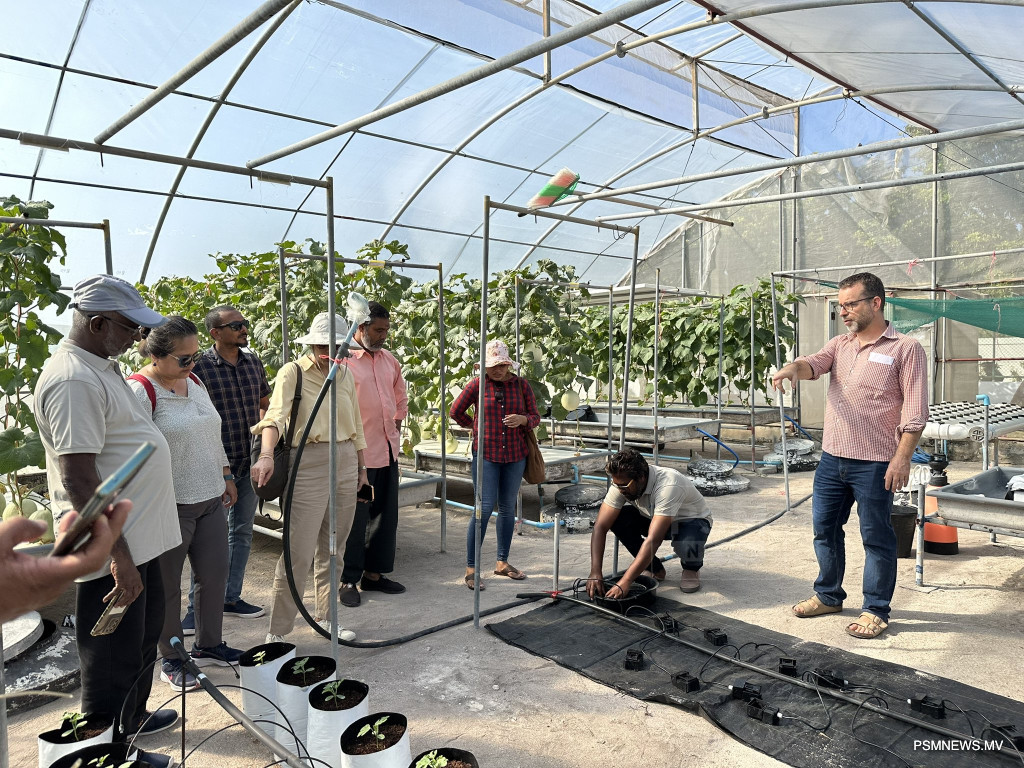
The Maldivian government has invited private investment to revitalise the country’s agricultural sector, as part of a wider strategy to boost food security and promote sustainable economic development.
For centuries, agriculture has been a key source of income for Maldivians. However, its role in the national economy has steadily declined as policy attention shifted towards higher-revenue industries, with farming increasingly viewed as seasonal and unreliable. As a result, the sector has remained underdeveloped, leaving the Maldives heavily dependent on food imports which is a long-standing concern among farmers and agricultural stakeholders.
A renewed focus on agriculture was outlined in President Dr Mohamed Muizzu’s Presidential Address, which identified the sector as essential to sustainable development and long-term economic resilience.
The government’s strategy aims to strengthen food security by increasing domestic production of staple crops, while creating a more attractive and supportive environment for private investment in agriculture.
“A very favourable environment for agricultural investments has now been created,” President Muizzu said, signalling the start of efforts to expand agribusinesses and encourage greater private-sector participation.
Under a public–private partnership model, agricultural projects have already been announced in Kondey and Kaashidhoo. Similar initiatives are scheduled to begin later this year in Gan and Nolhivaram. The projects are intended to promote sustainable farming practices at island level, while addressing persistent challenges faced by local farmers, including limited access to markets and difficulties in distributing produce.
As part of its modernisation drive, the government is also establishing value-addition centres and encouraging diversified cultivation across different regions of the country. Officials say these initiatives are designed to transform Maldivian agriculture into a more productive and technologically advanced sector, reduce reliance on imports, and support long-term food sustainability.