

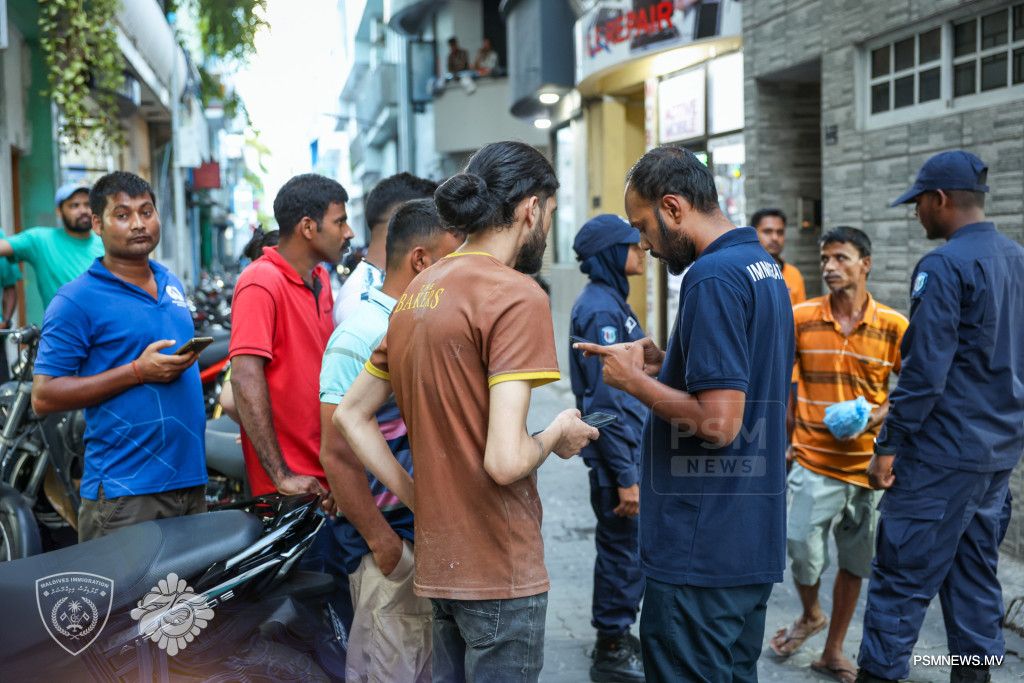
The Ministry of Homeland Security, Labour and Technology has announced that it is actively pursuing the creation of a permanent facility in the capital Male’ dedicated to protecting and assisting victims of human trafficking.
Speaking on PSM News’s “Raajje Miadhu” programme, the Minister of State for Homeland Security, Labour and Technology, Dr Abdulla Phairoosch explained that while temporary accommodations in Gulhifalhu and Himmafushi have provided medical and psychological aid, logistical challenges have hampered efforts to deliver consistent support outside the capital.
“Recently, what we have been doing is keeping them in a guesthouse or a rented space in Male’ to provide the necessary assistance or record statements. We are now working on identifying ways to establish a permanent setup in Male’. However, these are not things that can be done so easily,” he explained.
He added that the envisioned centre would consolidate all essential services—medical care, counseling, legal aid, and shelter—under one roof, with victim safety and protection as the guiding principle. Research and planning for the initiative are currently underway, the State Minister noted.
Phairoosch also highlighted ongoing exploitation faced by expatriate workers in the Maldives, citing non‑payment of wages, passport retention, and unsuitable working conditions as persistent problems. He pointed out that the greatest obstacle to prosecuting traffickers is the difficulty of gathering evidence, especially when victims, after receiving unpaid wages, opt to return home rather than pursue legal action.
“As soon as they receive their salary, they no longer wish to pursue the case. The foreign worker simply wants to return to their home country quickly, or escape the situation. Because of this, it becomes difficult to take legal action against those involved in the crime. Law enforcement still requires certain physical evidence and proof to advance the case,” he said.
While acknowledging that such challenges are not unique to the Maldives, Phairoosch stressed the importance of building systems that allow cases to proceed on alternative evidence even when victims decline to give statements.