

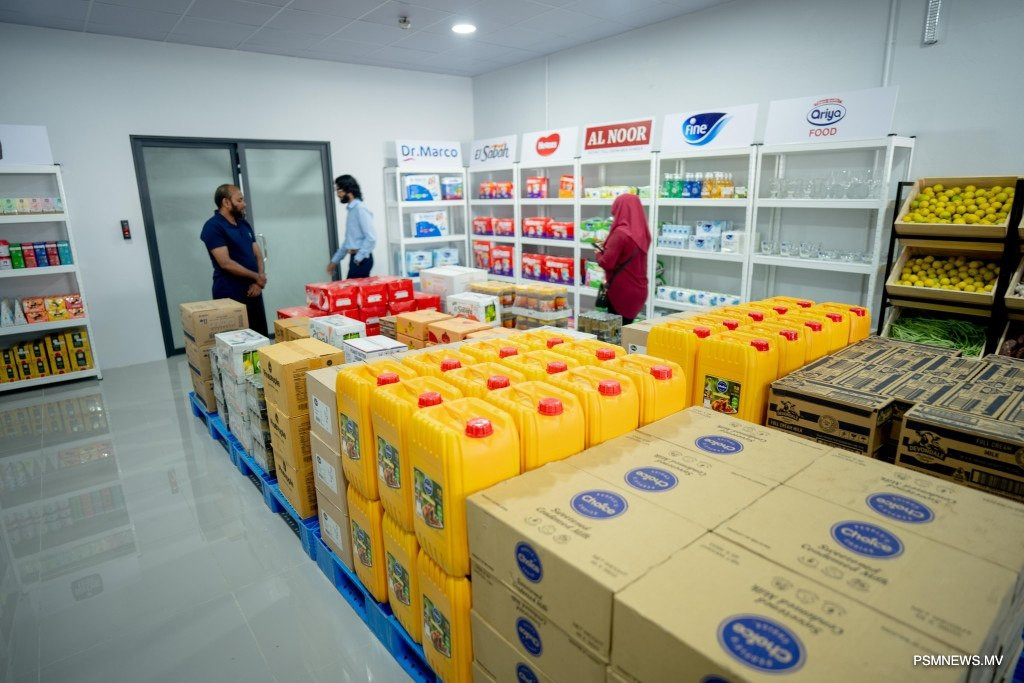
Major importers have said the recent rise in commodity prices is due to the Middle East war and rather than a result of government policies. Their statement comes amid opposition claims that the government is responsible for the hike in prices.
The war has disrupted shipping through the Strait of Hormuz, leading to higher oil prices and increased freight costs. This, in turn, has pushed up import prices and economic challenges.
Minister of Economic Development, Transport and Trade Mohamed Saeed accused opposition politicians of spreading misinformation about the causes of rising prices and making conditions more difficult for businesses. He said the reasons for inflation include higher freight charges and the previous administration’s money printing.
While increasing foreign currency rates have also contributed to the rise in commodity prices are linked, the minister said the government is working with importers to keep the prices of designated basic commodities low. He added that previous governments had not taken similar measures.
Businesses said shipping costs have increased sharply since the war and increased fuel prices, making imports significantly more expensive. According to Ahmed Nasir, the Managing Director of Lily Enterprises Pvt Ltd, one of the Maldives’ leading import businesses, 20-foot containers that used to cost USD 1,600 to ship now cost USD 2,750, and 40-foot containers that used to cost USD 4,000 has now doubled to USD 8,000.
Businesses have noted the government’s efforts to stabilise the prices of basic commodities. Local company MHA’s Admin and Human Resource Manager Alim Adam said long-term relationships with international suppliers have helped absorb part of the cost increases and cushion the impacts of market changes.
Minister Saeed said the administration, under the guidance of President Dr Mohamed Muizzu, will continue taking measures to ease the impact of global price increases and protect consumers.