

In a landmark development that promises to transform the fortunes of Maldivian fishermen, the United Kingdom has agreed to suspend tariffs on fish products exported from the Maldives, marking the culmination of more than a decade of diplomatic efforts and negotiations.
This breakthrough comes after years of uncertainty that saw the island nation's access to one of its most lucrative markets eroding under the weight of mounting duties, threatening the livelihoods of thousands who depend on the fishing industry for their survival.
The fishing sector has long been heralded as the backbone of the Maldivian economy, with successive governments promising to secure favourable terms for the nation's fishermen and ensure that Maldivian seafood commands prices that reflect its exceptional quality. While these promises have seen mixed implementation over the years, one critical aspect remained persistently neglected—the determination required to power the industry's growth and competitiveness in international markets. Yet even as domestic challenges persisted, the external threat posed by tariff barriers in key export destinations posed an equally formidable obstacle to the sector's prosperity.
The UK occupies a position of extraordinary significance in the Maldivian fishing industry's export landscape. While Thailand traditionally served as the largest market for Maldivian fish exports, comprehensive customs data from recent years reveals that the UK has emerged as the second-largest destination for these products, commanding a substantial share of the nation's fishing exports. What distinguishes the British market from its Asian counterparts is the nature of the products demanded—while the Thai market predominantly receives raw fish requiring further processing, British consumers and retailers require fully processed, packaged, and value-added fish products prepared entirely within the Maldives.
This difference carries profound economic implications. When fish products are processed domestically before export, the Maldives retains more value within its borders, creating employment opportunities, developing local expertise, and maximising the revenue generated from each catch. According to industry statistics, the UK market accounts for around four-quarters of the Maldives' total fishing industry exports. The British market represents nearly two-thirds of the overseas demand for high-value, processed fish products originating from the Maldives. These figures underscore why expanding and securing access to the UK market has been a consistent priority for every administration..
The seeds of the current resolution were planted in 2011, a year that marked a turning point in Maldives' international trade status. Prior to this transition, the Maldives enjoyed privileged access to British and broader European markets as a least-developed country, exporting fish and fish products completely free of tariffs under preferential trade arrangements designed to support developing economies. This advantageous position allowed Maldivian fishermen to compete effectively in price-sensitive international markets while maintaining acceptable profit margins.
However, following the country's graduation to developed country status in 2011, the preferential tariff treatment that had sustained the industry for years began to phase out. A transitional period extending until 2014 provided temporary relief, during which Maldivian exports continued to enjoy tariff-free access to the UK and the broader European Union. When this transitional period concluded in 2014, the full weight of tariff obligations descended upon the industry—exports to the UK market suddenly faced duties of up to 24 percent.
Recognising the catastrophic potential of the tariff imposition, successive Maldivian governments launched diplomatic efforts to secure alternative trade arrangements. The focus centered on negotiations with the EU, which at the time governed the UK's trade policies as part of the UK's membership in the bloc. Unfortunately, these negotiations proved unsuccessful.
The situation grew more complicated when the UK voted to withdraw from the EU in 2016, initiating Brexit. This departure fundamentally altered the trade negotiation landscape, as the Maldives now needed to pursue bilateral arrangements with a sovereign UK rather than seeking solutions through Brussels. By 2021, the British government had established its own tariff schedule for countries with which it had not concluded trade agreements. Under this new framework, Maldivian fish products faced tariffs of around 20 percent.
Throughout this twelve-year period, governments repeatedly assured the public that negotiations were progressing satisfactorily. Official announcements frequently characterised diplomatic discussions as successful, creating expectations of imminent breakthroughs. One notable example occurred under the previous administration, which announced in June 2023 that the UK had agreed to initiate formal consultations regarding a free trade agreement with the Maldives. As electoral pressure mounted, the government further suggested that the British government had expressed confidence in providing tariff relief, raising hopes among fishermen that resolution was finally at hand.
Domestic measures attempted to compensate for the tariff burden. Ahead of the second round of a presidential election, the government increased the fish tariff from USD 1.1 to USD 1.6. While intended to demonstrate commitment to the fishing community, this approach placed enormous fiscal strain on state resources. Official estimates indicated that the new pricing cost the government around USD 71.3 million annually. Worse still, the new pricing proved insufficient to prevent significant payment arrears to fishermen, who found themselves waiting months to receive payments for their catch.
When President Dr. Mohamed Muizzu assumed office, the tariff challenge remained unresolved despite years of previous efforts. His administration signaled early that the fishing industry would receive priority attention, with the President himself undertaking a strategic visit to the UK in July of last year to advance the cause personally.
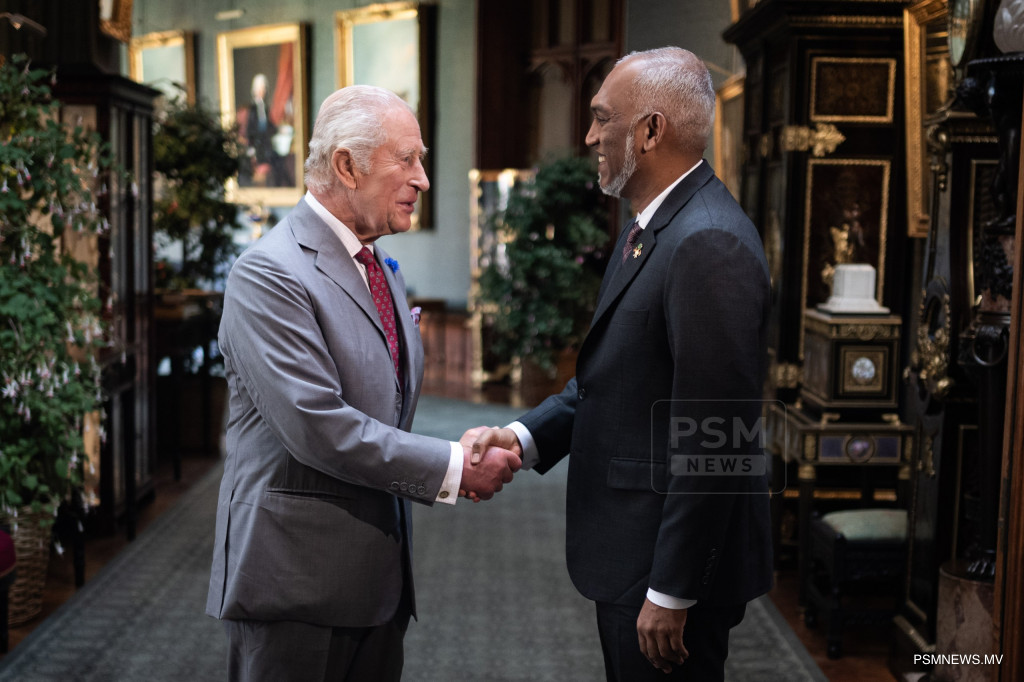
During his visit to the UK, President Muizzu engaged in a series of high-level meetings designed to place the Maldives' fisheries interests at the forefront of bilateral discussions. His audiences included King Charles III as well as the Secretary-General of the Commonwealth and senior officials within the British Government's legislative branch. These meetings provided opportunities to highlight the Maldives' position directly to decision-makers, emphasising both the historical ties linking the two nations and the mutual benefits of trade.
The visit yielded concrete institutional outcomes beyond symbolic engagement. The Ministry of Economic Development, Transport and Trade signed a Memorandum of Understanding with the West London Chamber of Commerce, establishing a formal framework for strengthening commercial relations between the two countries. This agreement created mechanisms for ongoing dialogue and collaboration that extended beyond government-to-government discussions to encompass the business communities on both sides.
Most significantly, President Muizzu launched the Maldives fisheries brand "From Maldives" at the UK-Maldives Business Forum held during his visit. This branding initiative represented a strategic effort to position Maldivian fish products distinctly in the minds of British consumers, associating them with quality, sustainability, and the unique heritage of the island nation.
Today, those sustained efforts have produced the breakthrough that fishermen have awaited for twelve years. The UK has decided to implement tariff cuts on fish products originating from the Maldives, ending the period of uncertainty that has constrained the industry's growth and profitability.
The significance of this development cannot be overstated. For the first time since 2011, when the preferential tariff arrangements began their phase-out, Maldivian fish products will enjoy substantially reduced duties in one of the world's most demanding and lucrative markets. Industry experts anticipate that the tariff reduction will restore the price competitiveness that Maldives fishermen enjoyed during the preferential access era, enabling them to compete more effectively against rival suppliers from nations that maintained favorable arrangements.
Sri Lanka, Seychelles, Mauritius, and Madagascar have long exploited their continued preferential access to export fish products to the UK and European markets. Critics have noted that these nations have not consistently prioritised sustainable fishing practices, yet their tariff advantages have allowed them to undercut Maldivian prices in third-country markets where Maldivian products compete as re-exports.
The benefits anticipated from this development extend far beyond immediate price improvements. Fishermen who have endured years of uncertainty, delayed payments, and shrinking profit margins can now look forward to more stable and predictable market access. The restoration of tariff-free or reduced-tariff access to the UK creates conditions favourable for long-term investment in the industry, as businesses gain confidence that their export destinations will remain viable.
For an industry that has endured more than a decade of eroded competitiveness and uncertain prospects, the UK's decision marks the beginning of a new chapter. After twelve years of negotiations, broken promises, and mounting frustrations, Maldivian fishermen can finally anticipate a return to the tariff-free access that once made their products competitive in one of the world's most important markets.